


Boost your operational efficiency. Let ODIN show you the way.
At ODIN, we partner with you to implement seamless and reliable facilities services that deliver measurable improvements to your business. Find out how we can help.

Looking for something specific? Reach out to our team to discuss your exact requirements. We’re here to help and advise.
Insights 30th September 2025
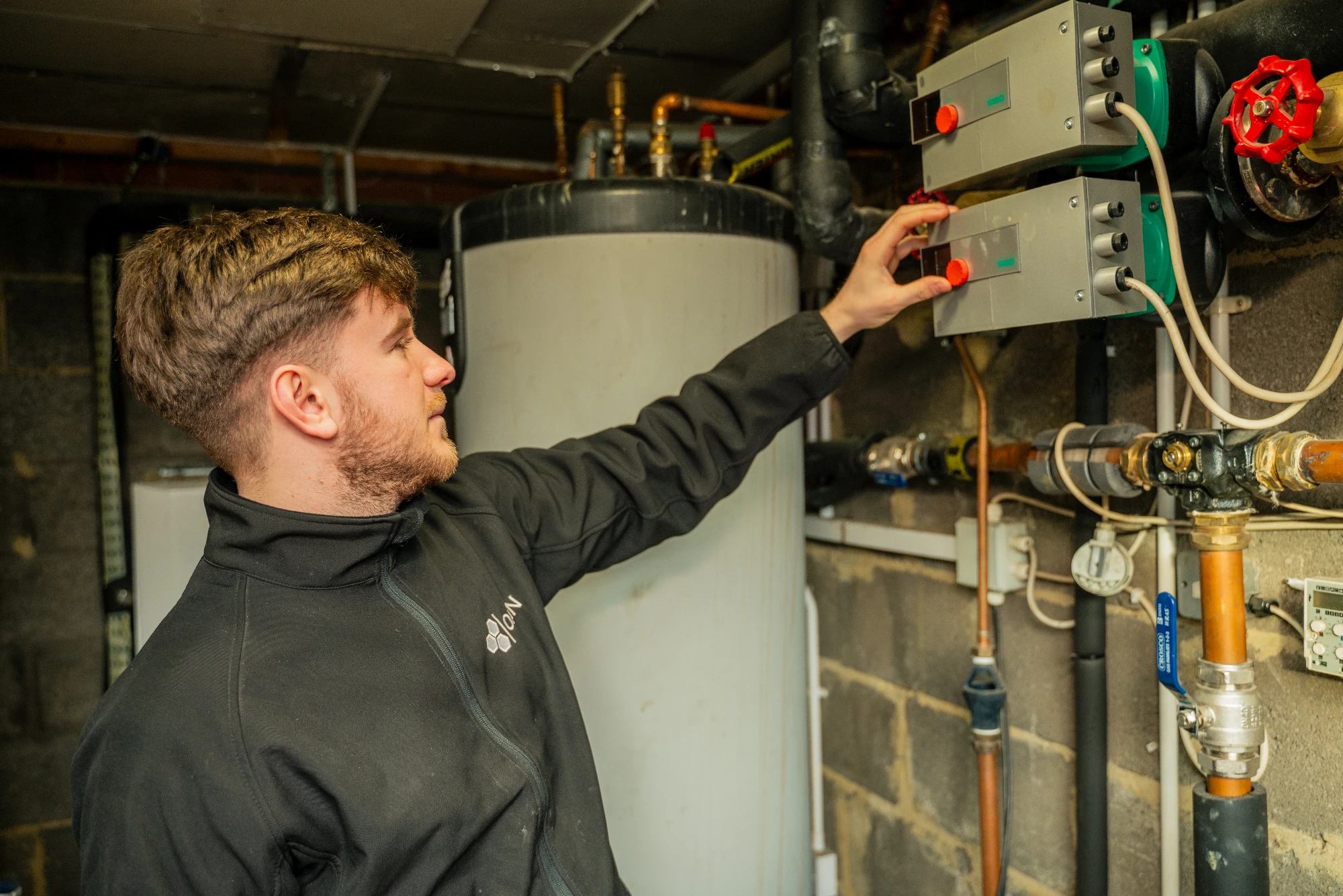
In a commercial environment, the demand for hot water is constant and often unpredictable. While occupants may only see the tap, the system behind it is a sophisticated network designed to deliver a reliable, high-volume supply at a moment’s notice. The heart of this system is hot water storage cylinders.
Unlike residential settings where on-demand systems like combi boilers might suffice, commercial environments require a robust solution. This blog post delves into the crucial role of hot water storage cylinders and explains why they are essential in a building’s plumbing and heating infrastructure.
For a commercial building, a reliable hot water supply is a non-negotiable utility that impacts everything from health and safety to guest satisfaction and operational efficiency.
At its simplest, a hot water storage cylinder is a large, insulated tank designed to hold and maintain a substantial volume of heated water until it is needed.
These systems operate on a principle of pre-heating water during low-demand periods, storing it at a regulated temperature and then making it instantly available during high-demand peaks. This is different from on-demand systems, such as combi boilers, which heat water as it flows through the unit.
While a combi boiler is an excellent space-saving solution for a single-occupancy home, it is fundamentally limited by its flow rate.
When multiple showers or taps are running simultaneously in a commercial building, a combi boiler would be unable to provide a consistent temperature or pressure to all outlets, leading to user dissatisfaction and operational failures.
Similarly, small point-of-use water heaters, while useful for a single sink, are not a viable solution for serving an entire facility.
The key distinction in commercial storage cylinders is between vented and unvented systems.
Vented cylinders operate under gravity pressure and are open to the atmosphere via a vent pipe that terminates in a cold water storage tank, typically located in the roof space. The pressure and flow are determined by the height of the tank.
While reliable, they can be limited in their pressure output and are less common in modern commercial installations.
This is the preferred solution for most contemporary commercial applications. An unvented hot water storage cylinder is a sealed unit connected directly to the mains water supply. This allows it to deliver hot water at mains pressure to all outlets, ensuring a high-flow, high-pressure supply that is perfect for multi-outlet environments.
Because they are pressurised, unvented systems require a series of safety devices, including pressure relief valves, to manage expansion.
The choice between a vented and unvented system depends entirely on the building’s infrastructure, its specific hot water demands and the desired user experience. In most cases, the superior performance and efficiency of unvented hot water storage cylinders make them the optimal choice for new builds and system upgrades.
The operational rhythm of a commercial building is defined by surges in demand.
A hotel experiences a morning rush as guests prepare to check out. A school sees a sudden spike in usage after sports practice. A leisure centre has a constant, high volume of showers running after gym sessions or swimming. In these scenarios, the ability to provide an instantaneous and consistent supply of hot water is paramount.
This is where the true value of hot water storage cylinders becomes apparent. They act as a thermal battery, storing a pre-heated reserve that can be discharged rapidly to meet high-volume demands. This ensures that every outlet (from a single kitchen tap to dozens of simultaneous showers) receives the same consistent pressure and temperature without impacting other users.
Furthermore, a centralised hot water system with hot water storage cylinders offers significant operational advantages in multi-outlet environments. A single, high-capacity system that serves the entire building simplifies maintenance and control.
This centralised approach is far more efficient than managing multiple smaller, individual systems and it provides building managers with a single point of oversight for hot water production and distribution.
For expert advice on specifying, installing or maintaining the right system for your building, our team can help, offering comprehensive plumbing and heating services.
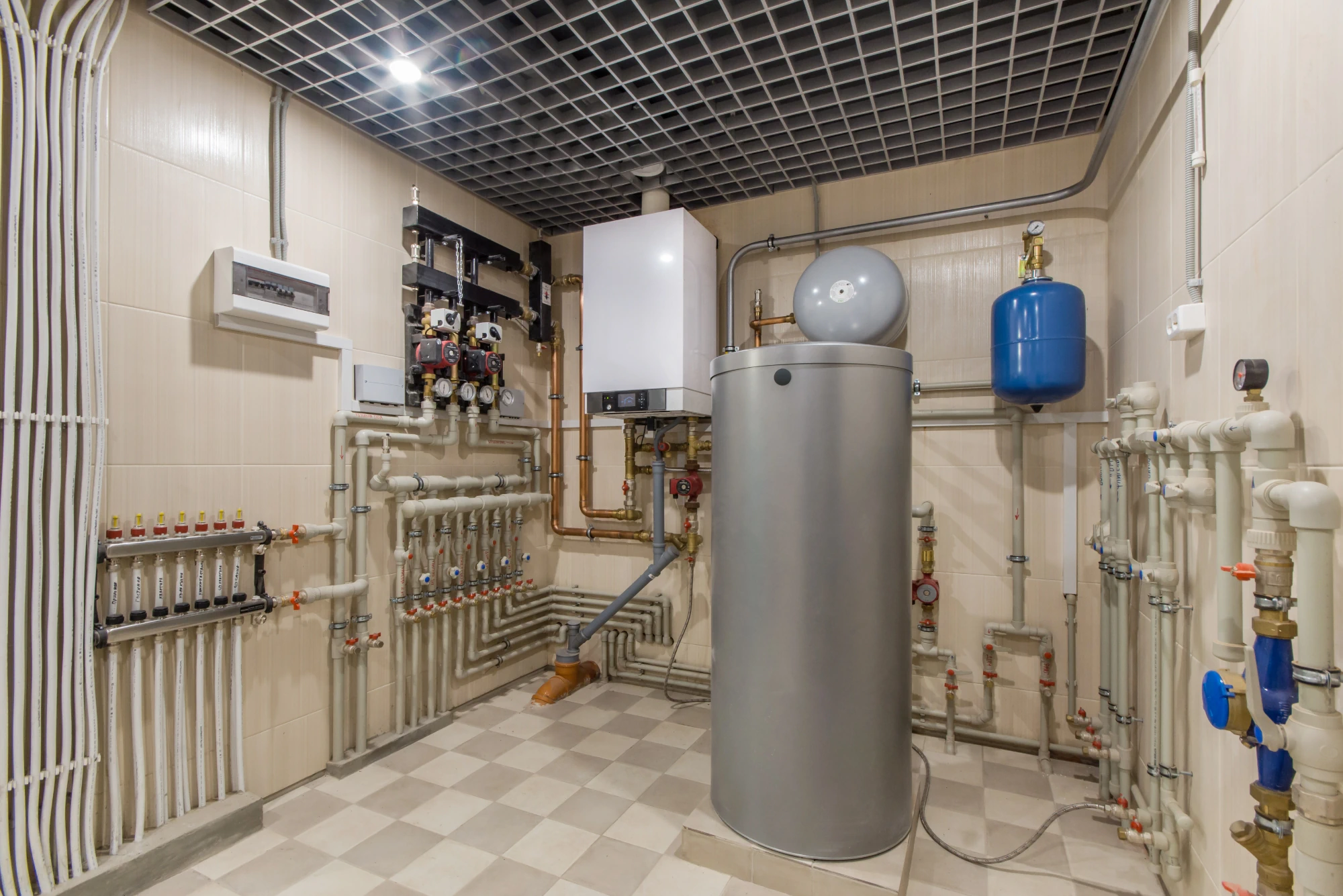
One of the greatest advantages of hot water storage cylinders is their design flexibility. They are heating-source-agnostic, meaning they can be integrated with a wide range of heat sources, offering adaptability and futureproofing for building managers.
While traditionally paired with gas or oil boilers, modern cylinders are perfectly suited for integration with more sustainable and energy-efficient heating technologies.
For example, a hot water storage cylinder can be directly paired with a solar thermal system, using the sun’s energy to pre-heat the water, which can then be topped up by a conventional boiler.
They are also ideal for use with high-efficiency air source or ground source heat pumps, which operate most effectively by generating heat at a consistent, lower temperature over a long period.
Modern hot water storage cylinders also boast impressive energy performance and recovery times. Gone are the days of poorly insulated tanks that lose heat rapidly. Today’s models feature advanced insulation materials that significantly reduce standing heat loss, ensuring the stored water remains hot for long periods without the need for constant reheating.
In high-demand commercial settings, fast recovery times are crucial. Modern cylinders are equipped with high-efficiency heat exchangers that allow them to reheat the entire tank volume in a matter of minutes, ensuring the system is ready to meet the next surge in demand without a significant drop in temperature.
The longevity and safe operation of hot water storage cylinders depend heavily on a robust maintenance programme. Neglecting a system can lead to a range of costly and dangerous issues. Regular servicing is a critical component of a facilities manager’s legal responsibility.
One of the most significant risks is the build-up of Legionella bacteria. Stored water at temperatures between 20°C and 45°C provides an ideal breeding ground for these bacteria, which can cause Legionnaires’ disease if inhaled through aerosolised water droplets.
Regular maintenance, including temperature monitoring, system flushing and ensuring the water is kept above 60°C to kill the bacteria, is essential for compliance with health and safety regulations.
Beyond biological threats, a lack of maintenance can lead to scale and corrosion. Hard water can cause limescale to build up on heating elements and within pipework, reducing the system’s efficiency and shortening its lifespan.
Similarly, corrosion can degrade the tank’s interior, leading to leaks and catastrophic failure. Regular inspections, descaling, and the replacement of components like anode rods are vital preventative measures that ensure the system operates reliably for years.
Hot water storage cylinders can be a critical asset that underpins the operations of your entire facility. Our extensive experience in commercial plumbing and heating allows us to provide a comprehensive, end-to-end service for hot water storage cylinders, from initial system design to long-term maintenance.
We work with facilities managers in a wide range of sectors, including hotels, schools, care homes and leisure centres, to specify and install tailored solutions that meet their unique hot water demands.
We conduct a thorough needs analysis, considering factors such as building occupancy, usage patterns and energy efficiency goals, to recommend the optimal system for your business.
We offer a full suite of preventative maintenance contracts, ensuring your hot water storage cylinders are regularly serviced to prevent scale, corrosion and the build-up of harmful bacteria.
Our expert engineers are trained to identify potential issues before they become major problems, maximising your system’s lifespan and operational efficiency. In the event of an emergency, our responsive team provides a fast and reliable service to get your system back online with minimal disruption.
To learn more about how we can support your commercial hot water needs, contact our team of experts today.
At ODIN, we partner with you to implement seamless and reliable facilities services that deliver measurable improvements to your business. Find out how we can help.
